



Who Is Next of Kin When Someone Passes Away?

When a loved one passes away, family members are often faced with important decisions regarding funeral arrangements, cremation authorization, and final disposition. During an already emotional time, questions can arise about who has the legal authority to make these decisions.
Understanding who qualifies as the next of kin can help families navigate the process with confidence and avoid unnecessary delays.
What Does “Next of Kin” Mean?
The term next of kin generally refers to a person’s closest living relative. Depending on the circumstances, this may include a spouse, adult children, parents, siblings, or other relatives. Next of kin is the person or people who have the legal authority to make funeral, cremation, and other important decisions after someone dies when no one else has been legally designated.
When an individual has not left written instructions regarding their final arrangements, state law typically determines who has the authority to make decisions about cremation, burial, and funeral services.
Who Has the Legal Right to Make Funeral and Cremation Decisions?
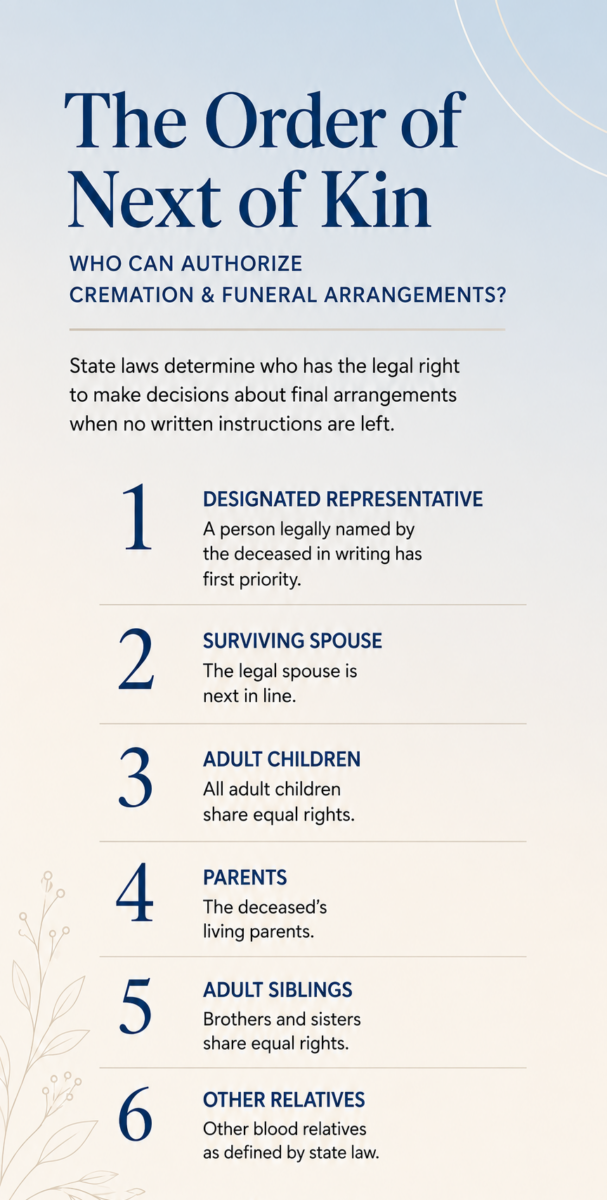
While laws vary between Virginia, Maryland, and the District of Columbia, the order of priority often includes:
- A designated representative named by the deceased
- Surviving spouse
- Adult children
- Parents
- Adult siblings
- Other relatives according to state law
Individuals may legally appoint a designated representative to carry out their funeral and cremation wishes. This person may have authority over other family members when proper documentation is in place.
What Happens When Multiple Family Members Share Authority?
Situations can become more complicated when multiple individuals have equal legal standing, such as several adult children. In these cases, funeral providers may be required to obtain authorization from all parties or a majority of those entitled to make the decision, depending on state law.
Disagreements among family members can delay arrangements and create additional stress during a difficult time. This is one reason why pre-planning and documenting your wishes can be so valuable.
Does a Power of Attorney Still Have Authority After Death?
One of the biggest misconceptions is that a Power of Attorney can continue making decisions after someone dies.
In most situations, a Power of Attorney ends immediately upon death.
After death, authority passes according to state law or to a legally designated representative if one has been appointed.
Why Pre-Planning Matters
One of the greatest gifts you can give your family is a clear plan. By documenting your preferences and designating someone you trust to carry out your wishes, you can help prevent confusion and ensure your loved ones understand your final wishes.
Pre-planning can:
- Ensure your wishes are honored
- Reduce family disagreements
- Prevent delays in cremation or burial arrangements
- Clarify who has legal authority
We’re Here to Help
At Carewell Cremations, we understand that navigating legal requirements and family decisions after a loss can feel overwhelming. Our care team helps families throughout Virginia, Maryland, and the District of Columbia understand their options and complete the necessary authorization process with confidence.
Call Carewell Cremations at 571-300-2273 anytime. Our caring team is always available to answer questions and help families understand their options during a difficult time.
End of Life Planning & Resources
Subscribe to get our free End-of-Life Checklist
